
Training Practical Ethics with Intelligent Systems
Organizations deploying intelligent systems need personnel who can recognize ethical tradeoffs, evaluate AI recommendations, and exercise appropriate judgment. TEEIS converts organizational policies and expert knowledge into interactive training tailored to the decisions your personnel face.
TEEIS combines a Bayesian Ethical Decision Model with realistic scenarios. Trainees choose among courses of action, observe theoretical operational consequences, and receive explainable feedback on how their choices align with applicable ethical, legal, policy, and operational criteria.

Education
Narrated videos introduce relevant ethical principles, system capabilities, and the decision model used in training.

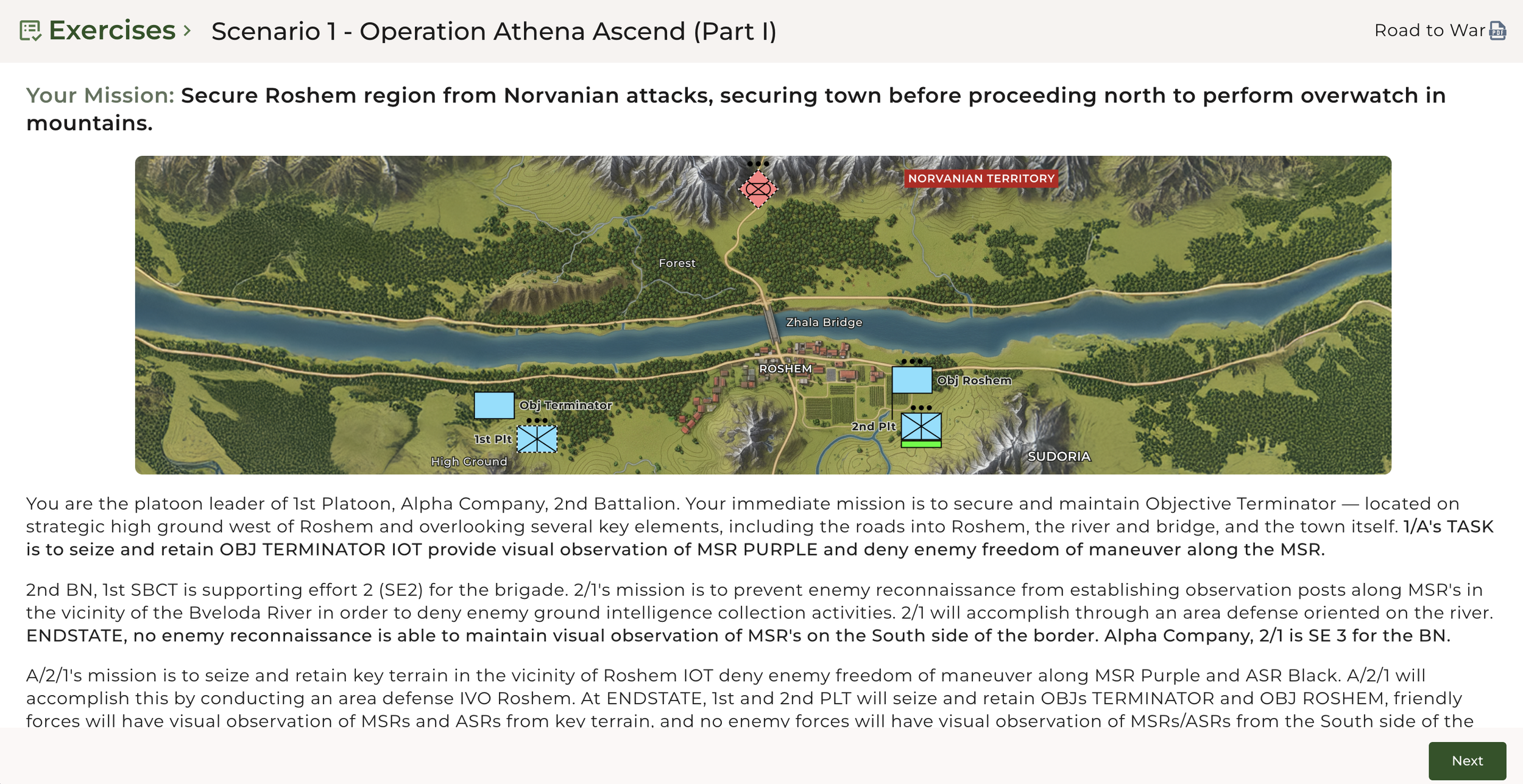
Realistic Scenarios
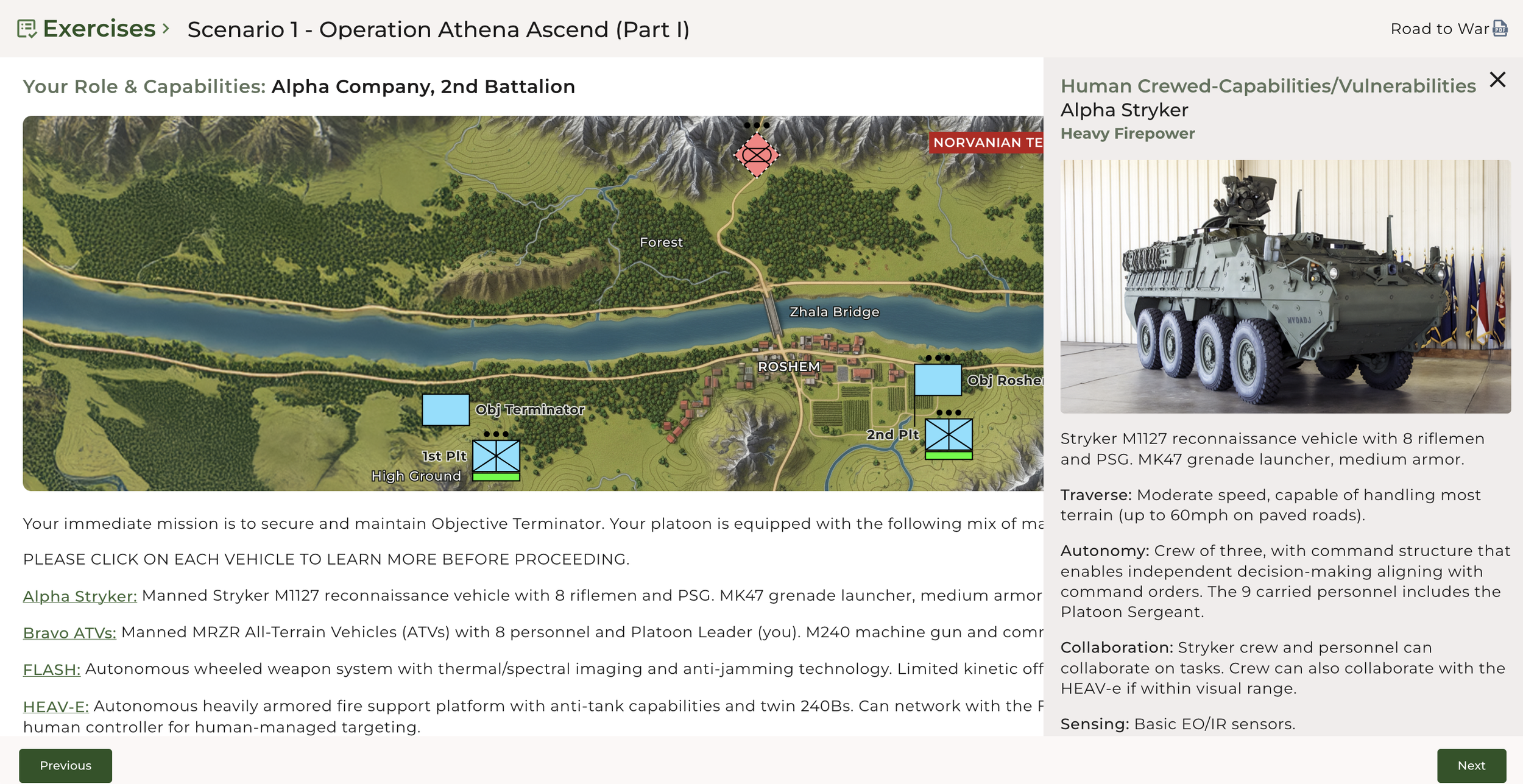
Interactive exercises place trainees in realistic situations that require meaningful choices among competing priorities.

Baysian
Model
An interrogatable probabilistic model assesses courses of action and identifies the critical factors driving each assessment.

After Action Review
Targeted feedback, coaching prompts, and reflection questions help connect trainee’s decisions to operational and ethical outcomes.
Practical Training Under Realistic System Conditions
Scenarios reflect your operating environment, decision authorities, and the capabilities and limitations of the systems your personnel employ. Trainees must weigh ethical and operational consequences under uncertainty, including when to question an automated recommendation or intervene in a system’s actions. Feedback helps trainees understand why different courses of action produce different assessments— and which factors most influence the outcomes. Instructors can review trainee choices and progress, guide discussion, and use after-action reviews to reinforce training objectives.
TEEIS can be tailored to defense, aviation, healthcare, finance, robotics, critical infrastructure, and other domains where people work with intelligent systems. Each application uses the organization’s own standards and operational context to develop practical judgment about responsible system use. The Ethical Decision Model supports human judgment by making its underlying assumptions, priorities, uncertainty, and tradeoffs explicit.
Use Case: Proving the TEEIS Approach with TEELAWS
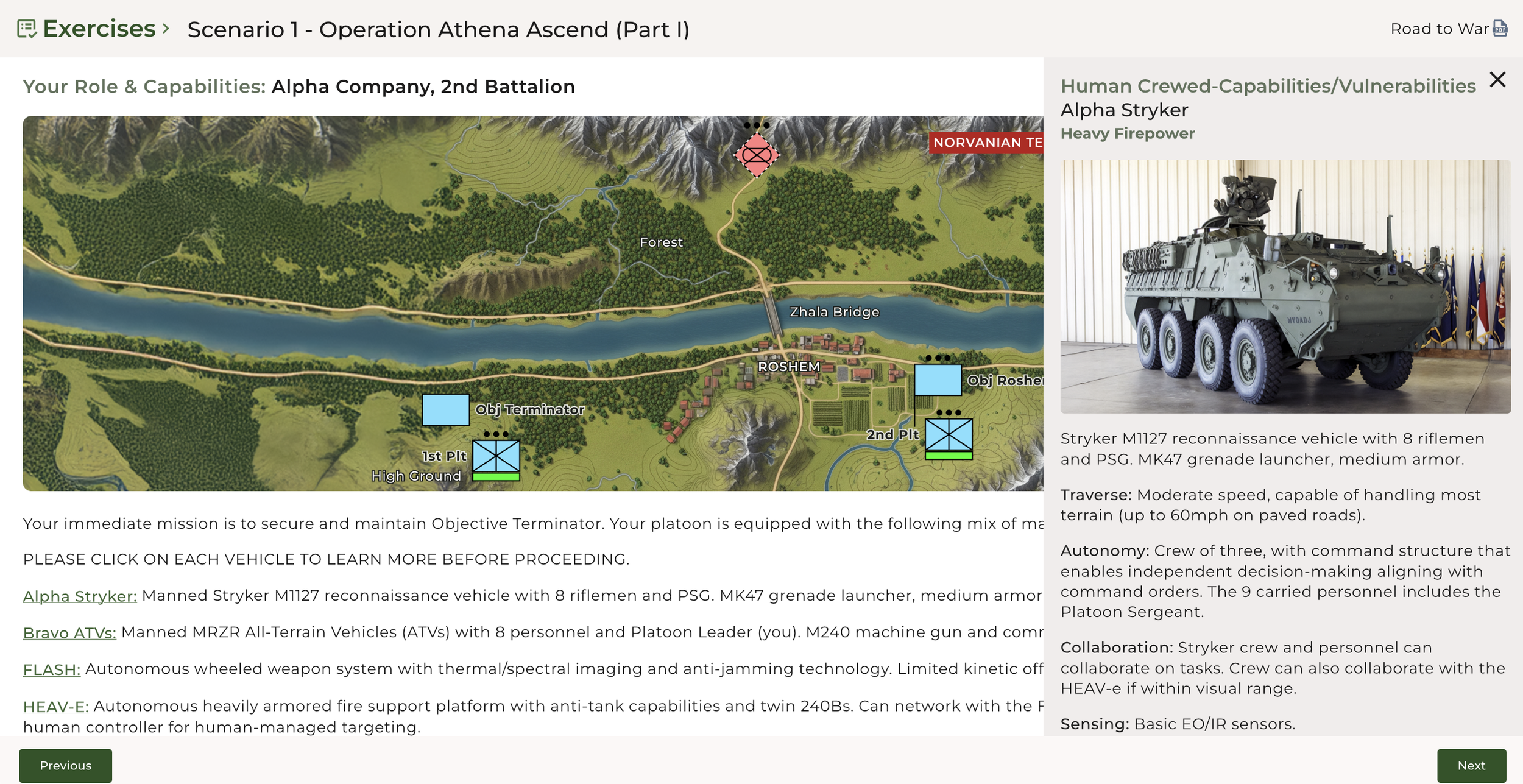
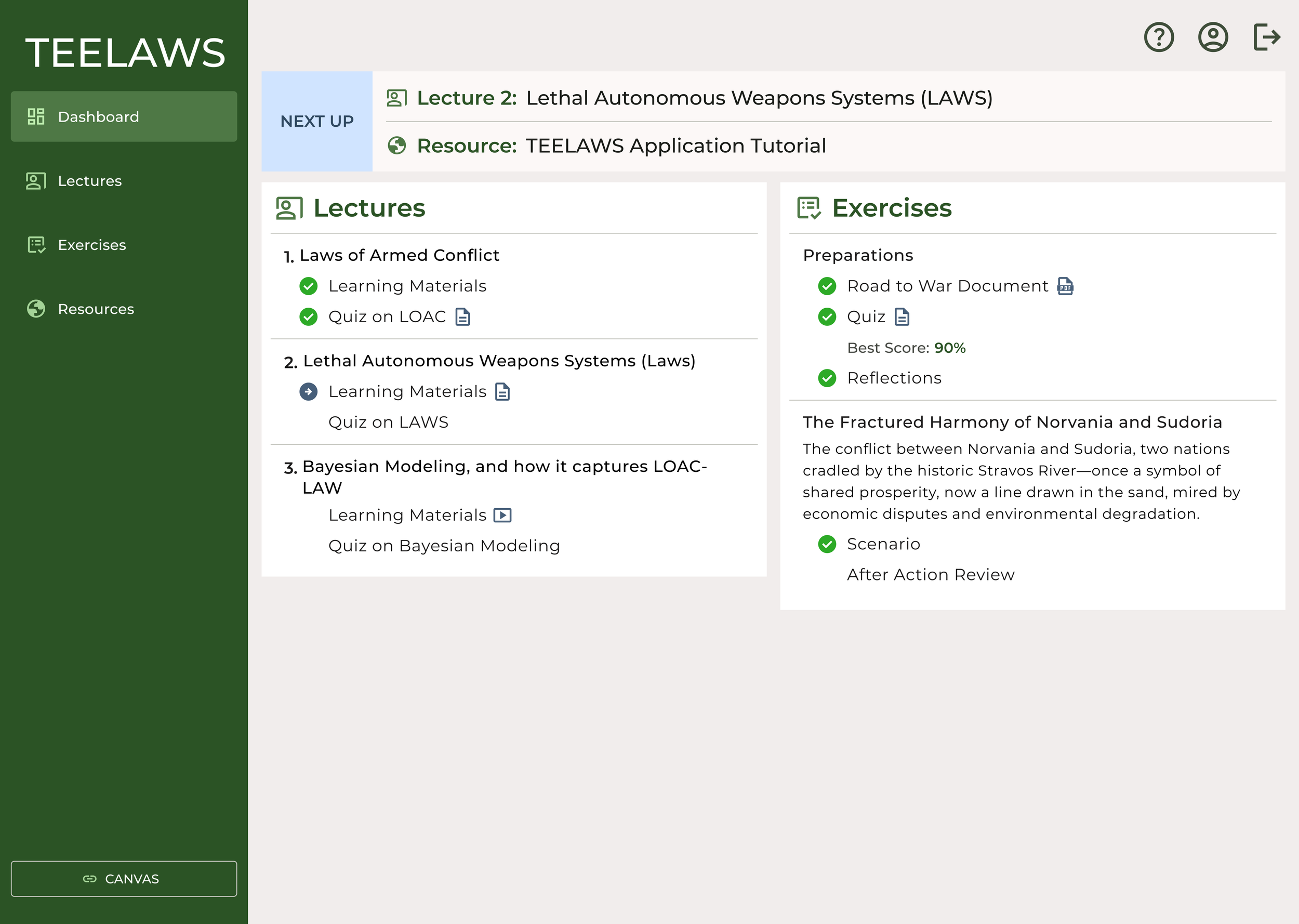
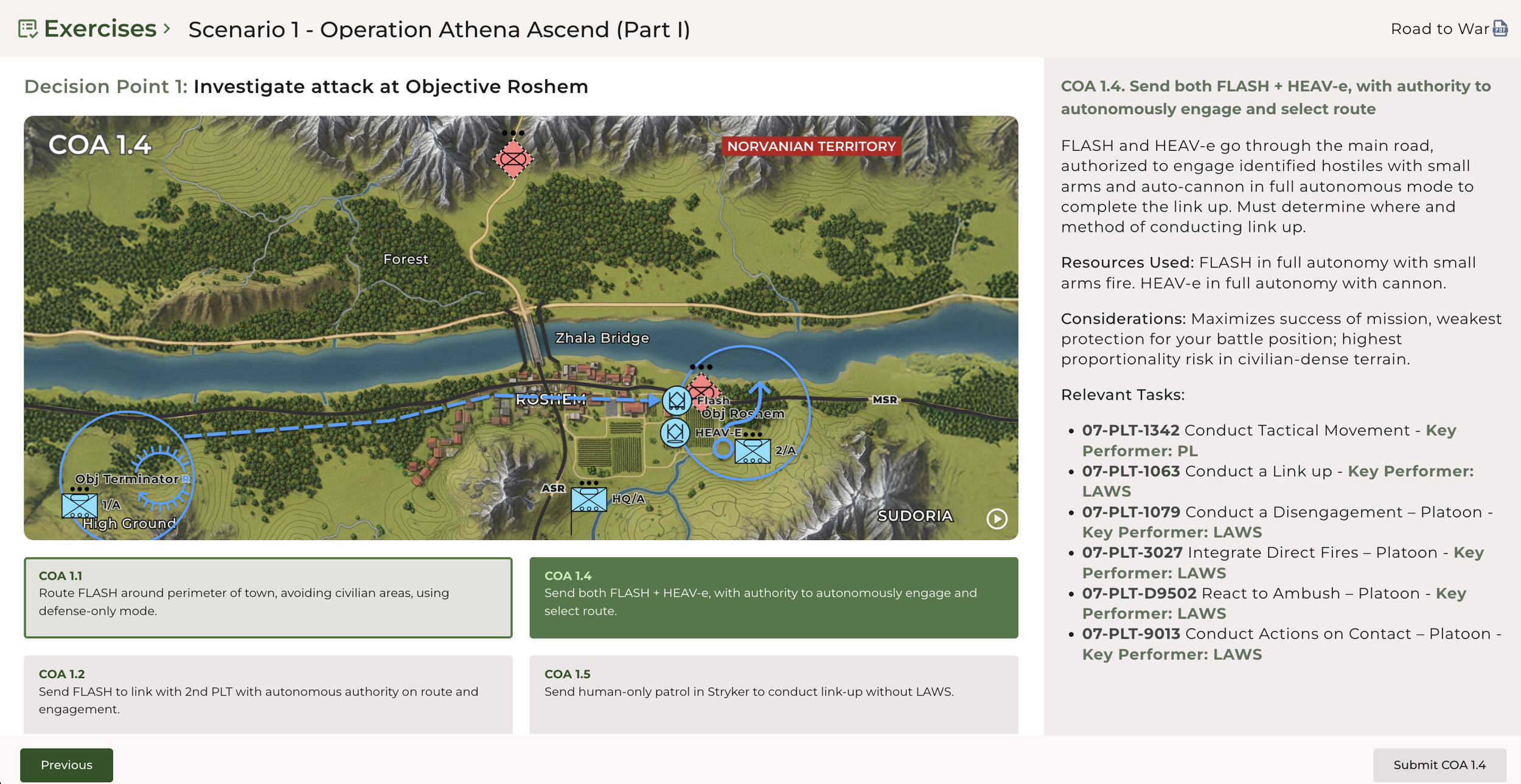
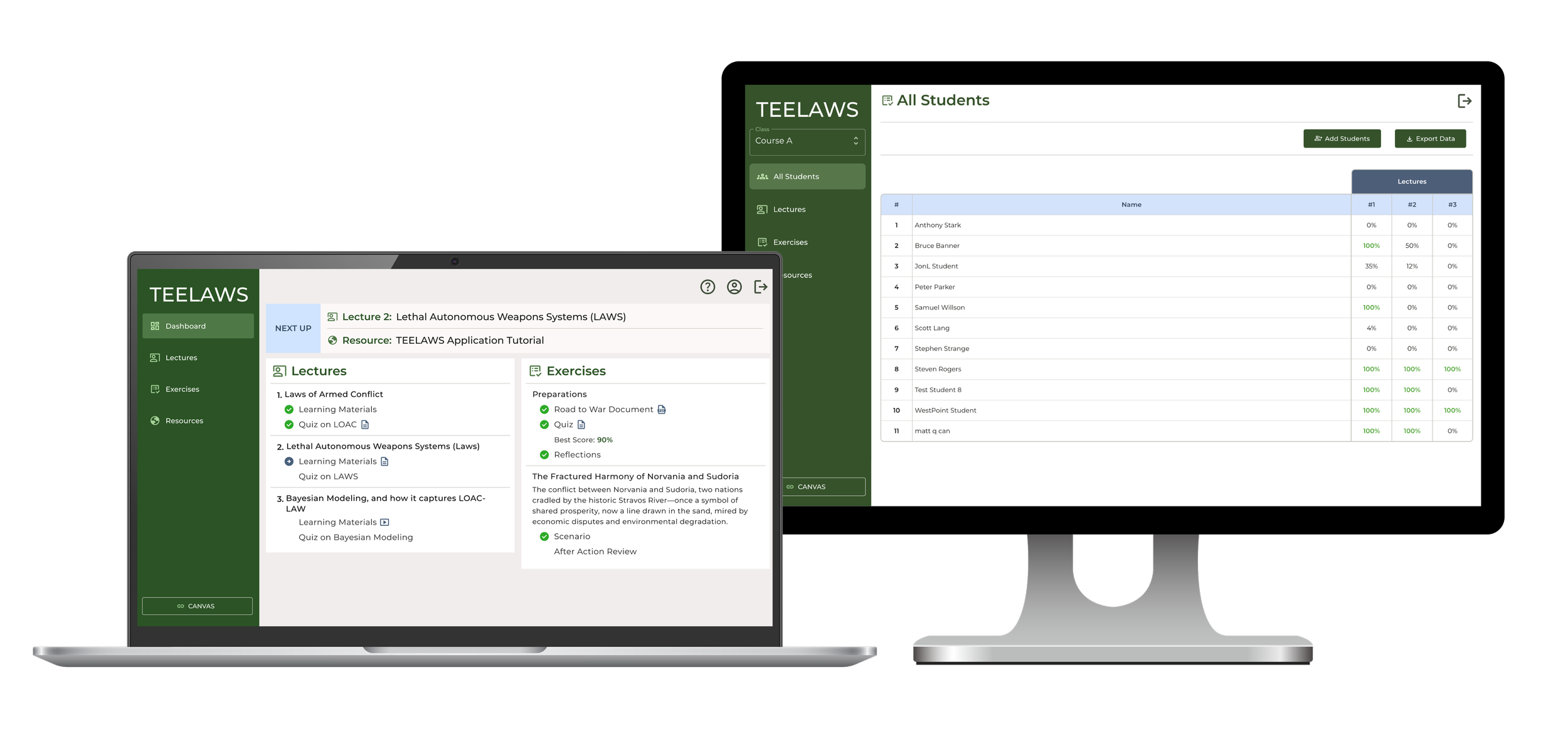
The TEEIS system was tested with the extreme use case of Lethal Autonomous Weapon Systems (LAWS) in the TEELAWS instructional system. Developed in collaboration with a US Military Academy, it places trainees in realistic command scenarios involving human and autonomous assets, using the Law of Armed Conflict as the basis of the Bayesian Model. The resulting TEELAWS program combines introductory instruction, realistic operational scenarios, and explainable ethical assessments in a browser-based course.
The approximately three-hour course supports classroom and remote instruction. Three short videos introduce ethical decision-making and the Law of Armed Conflict, Bayesian ethical decision modeling, and the capabilities and limitations of lethal autonomous weapons. Trainees then apply these concepts through military scenarios that require command decisions involving human and autonomous assets.
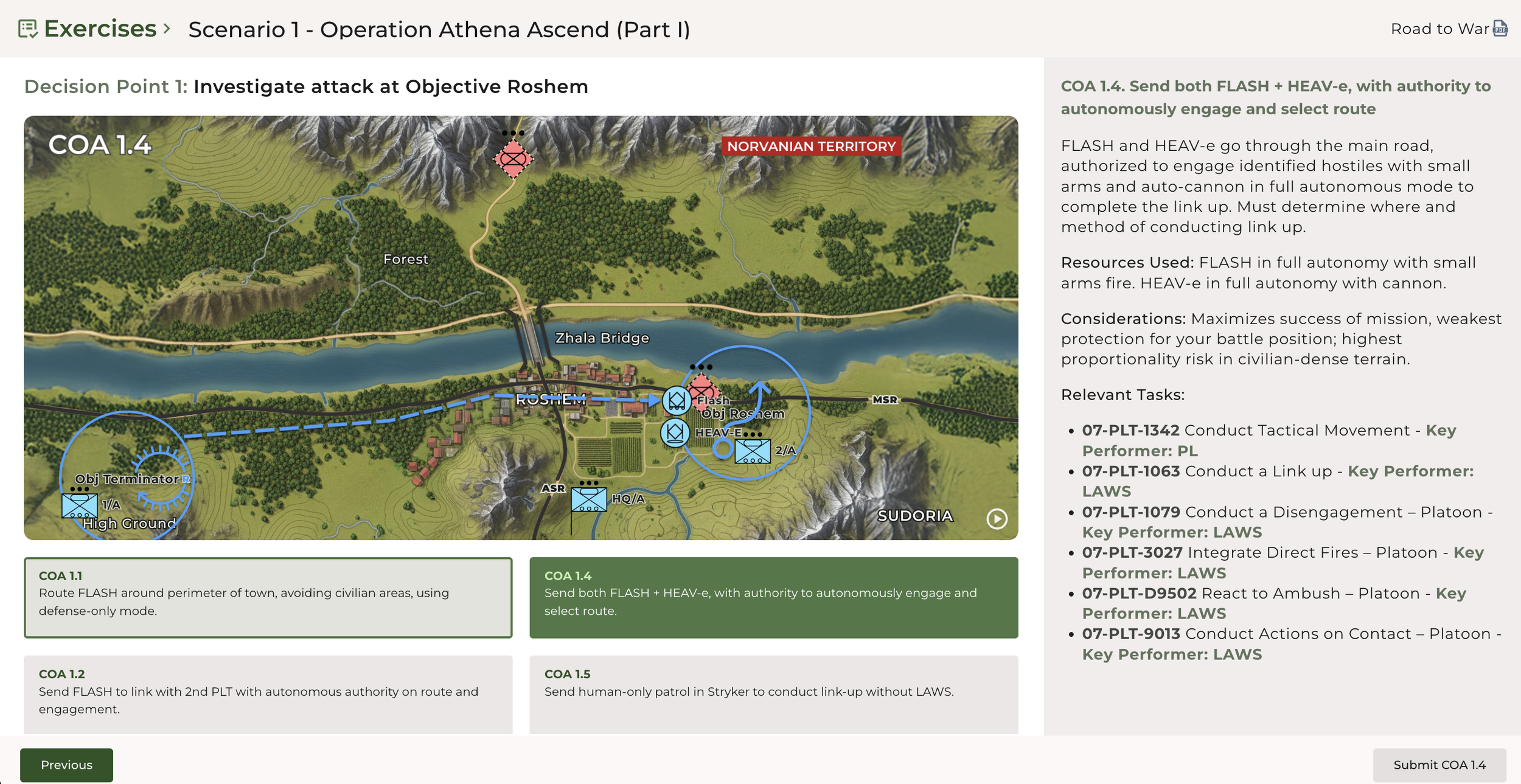
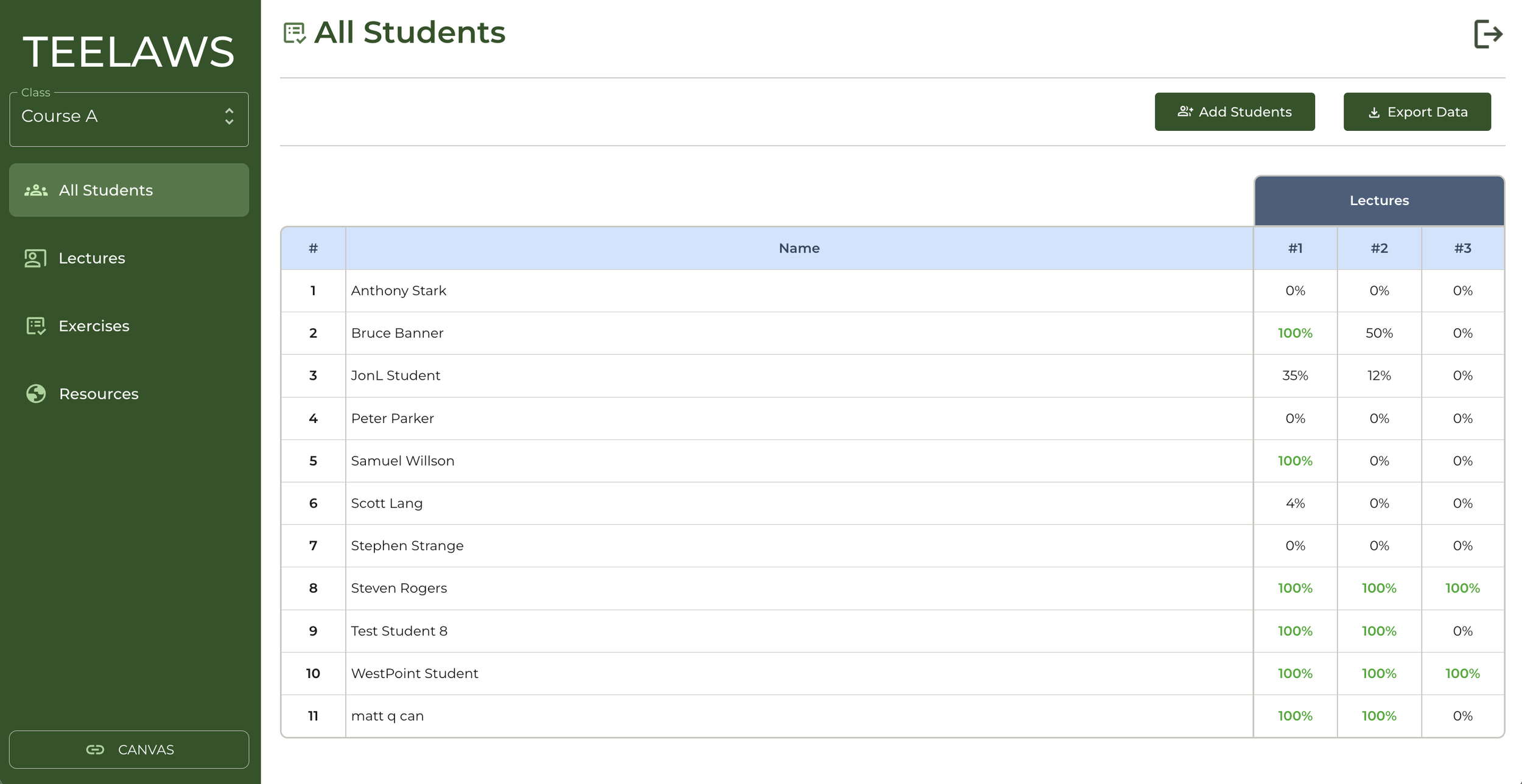
At various decision points, trainees review alternative courses of action and choose how to employ the manned and autonomous assets under their command. Each choice presents different operational benefits, risks, and ethical tensions, requiring trainees to consider system limitations alongside mission requirements.After each decision, trainees see the operational results and receive an assessment from the Bayesian Ethical Decision Model. Feedback includes an ethical score, a radar chart of key Law of Armed Conflict principles, and explanations of the factors most influential in the assessment. Reflection questions and after-action reviews help trainees connect their decisions to the resulting consequences. An instructor dashboard supports course administration, monitoring of trainee progress, and review of course usage and individual module results.
TEELAWS was evaluated in multiple courses involving approximately 200 trainees. Instructors used it for independent learning, classroom exercises, and discussion. The instructional framework functioned as intended, cadets and faculty responded positively to the scenarios and decision points, and the great majority of users found the course engaging and relevant. This experience demonstrates how TEEIS can translate organizational ethical standards into practical training within an established curriculum.
TEELAWS development received Small Business Innovation Research funding from the Air Force Research Laboratory and U.S. Army DEVCOM.